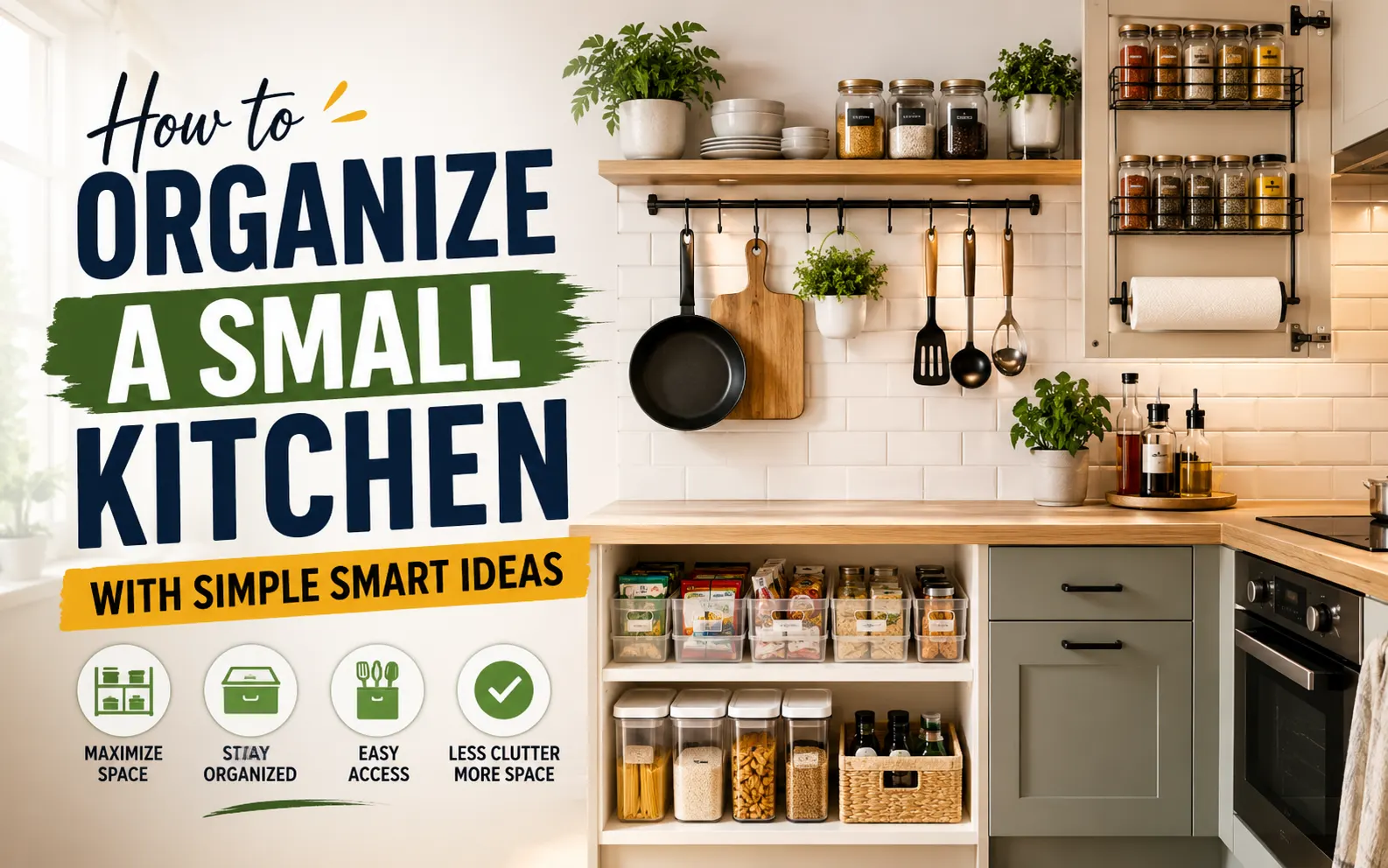
How to Organize a Small Kitchen With Simple Smart Ideas
I’ll be honest — my first apartment kitchen was a disaster. It was tiny. Like, barely-enough-room-to-sneeze tiny. Pots everywhere. Spice jars jammed into a drawer. And don’t even get me started on the Tupperware situation. Before
If you’re trying to figure out how to organize a small kitchen, I’ve been there. It’s not about having less stuff. It’s about using every inch wisely.
Here’s what actually worked for me — and why small kitchens can actually be really efficient once you get the layout right.
Start by Clearing Everything Out First
Before organizing, you need to see what you’re working with.
I did this on a Saturday morning with a cup of coffee. Pulled out every single item. Every mismatched lid. Every “why do I own this?” gadget.
It felt chaotic at first. But it forced me to make honest decisions about what I actually use. Three things you should do before buying any organizers:
- Remove everything from all cabinets and drawers
- Sort into three piles: keep, donate, trash
- Only put back what you use at least once a month
This one step alone freed up so much space. I donated two full bags of stuff I didn’t need
Use Vertical Space — It’s Basically Free Storage
Most people ignore the walls and cabinet doors. That’s a mistake.
Once I started thinking vertically, everything changed. The space above the fridge? Storage. The back of cabinet doors? Storage. Even the side of the fridge became useful.
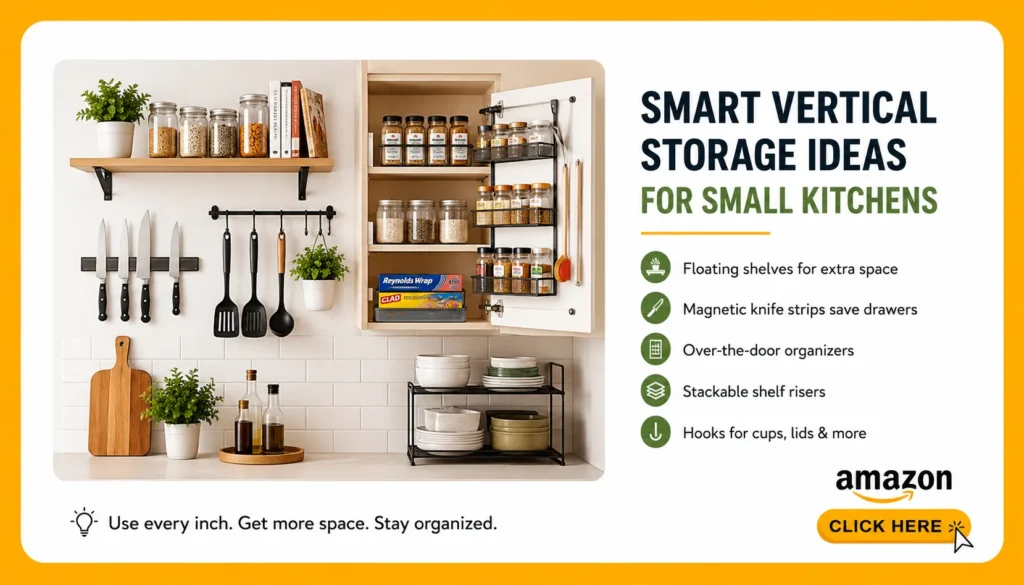
Best vertical storage ideas for small kitchens: My Favorite Small Kitchen Space Savers
- Floating shelves above the counter for oils, spices, or cookbooks
- Magnetic knife strips on the wall — saves a whole drawer
- Over-the-door organizers for spices, foil, and plastic wrap
- Stackable shelf risers inside cabinets to double your shelf space
- Hooks inside cabinet doors for measuring cups and lids
In smaller American apartments — especially in cities like Chicago or NYC — vertical storage isn’t optional. It’s survival.
Organize Cabinets by Use, Not by Type
Group things by when and where you use them, not just what they are.
I used to keep all my baking stuff together. Flour, sugar, pans, mixer — but they were in three different spots. Every time I baked, it was a scavenger hunt.
Now I do “zones.” Everything for morning coffee is in one spot. Baking stuff lives together. Pots and pans near the stove. It sounds obvious, but it genuinely changes how fast you can cook.
Smart kitchen zones to set up:
- Coffee/breakfast zone — mugs, filters, oatmeal all within reach
- Cooking zone — oils, spices, and utensils near the stove
- Baking zone — flour, measuring cups, mixing bowls together
- Snack zone — easy to grab, especially useful for families
This system cut my cooking prep time noticeably. Seriously.
Drawer Organization Makes a Huge Difference
Messy drawers are a daily annoyance — and they’re easy to fix.
My junk drawer had somehow become my only drawer. Spatulas, batteries, rubber bands, a mystery key. All in one place.
I bought cheap bamboo drawer dividers from Amazon — under $15. Game changer. Every drawer now has a purpose and stays that way (mostly).
- Use drawer dividers for utensils, not loose bins
- Keep your most-used tools in the drawer closest to the stove
- Ditch duplicate tools — do you really need four spatulas
How to Organize a Small Kitchen on a Budget
You don’t need to spend a lot. Most of my best storage wins cost under $20.
I get it — budget matters. Especially when the kitchen already feels like it’s winning the fight against you. The good news? Dollar Tree, IKEA, and Amazon basics are genuinely good enough for most small kitchen storage.
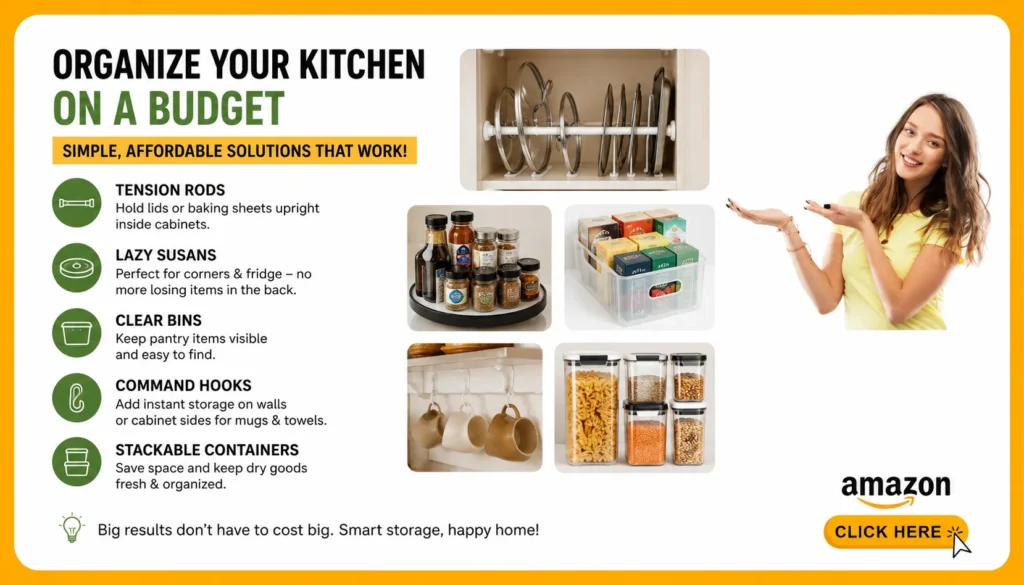
Budget-friendly tools that actually work:
- Tension rods inside cabinets to hold lids or baking sheets upright
- Lazy Susans in corner cabinets or the fridge — no more losing things in the back
- Clear bins for the pantry — you see everything at a glance
- Command hooks on walls and cabinet sides for mugs or towels
- Stackable containers for dry goods — uniform sizes save a ton of space
I spent maybe $40 total and it looked like a complete transformation. My mom visited and thought I’d renovated
Keep Counters as Clear as Possible
Counter space is your most valuable real estate in a small kitchen.
The more counter space I cleared, the bigger the kitchen felt. That’s the trick. Your brain reads open counter space as “room.”
Keep only daily-use appliances on the counter. Coffee maker, toaster — fine. The air fryer you use twice a week? Cabinet or a shelf.
- Store appliances you don’t use daily in a cabinet or pantry
- Use a small tray to corral countertop essentials — it looks intentional
- Mount a paper towel holder under a cabinet to free up counter space
Clutter-free counters also make cleaning so much easier. That alone is worth it.
Don’t Forget the Pantry or Fridge Organization
The same rules that apply to cabinets apply inside your fridge and pantry.
I used to open my fridge and stare blankly for 30 seconds trying to figure out what I had. Now with clear bins and labels, I know exactly what’s where.
- Use clear, stackable bins in the fridge — one for snacks, one for leftovers
- Put taller items at the back, shorter items in front
- Use a “eat me first” bin for things about to expire
- In the pantry, label everything — especially if you decant into containers
This also helps cut down on food waste. You actually use what you have.

FAQs About How to Organize a Small Kitchen
Q: How do I organize a small kitchen with no pantry?
Use cabinet doors, wall shelves, and a rolling cart for extra storage. A narrow bookshelf in a nearby hallway can also double as a pantry.
Q: How to organize a small kitchen on a budget?
Start with what you have. Use tension rods, clear bins, and command hooks — most under $10. Dollar stores and IKEA are great starting points.
Q: What should I keep on my kitchen counter?
Only daily-use items like your coffee maker or toaster. Everything else should have a home inside a cabinet or shelf to keep counters clear.
Q: What are the best storage solutions for small kitchens?
Lazy Susans, stackable shelf risers, magnetic knife strips, and over-door organizers are top picks. They maximize space without needing a renovation.
Q: How often should I reorganize my small kitchen?
Do a quick reset every season — about every 3 months. Toss expired items, return misplaced things, and see if your zones still make sense for how you cook.
Disclosure: This article contains affiliate links. If you purchase through these links, we may earn a small commission at no extra cost to you. All opinions are our own.